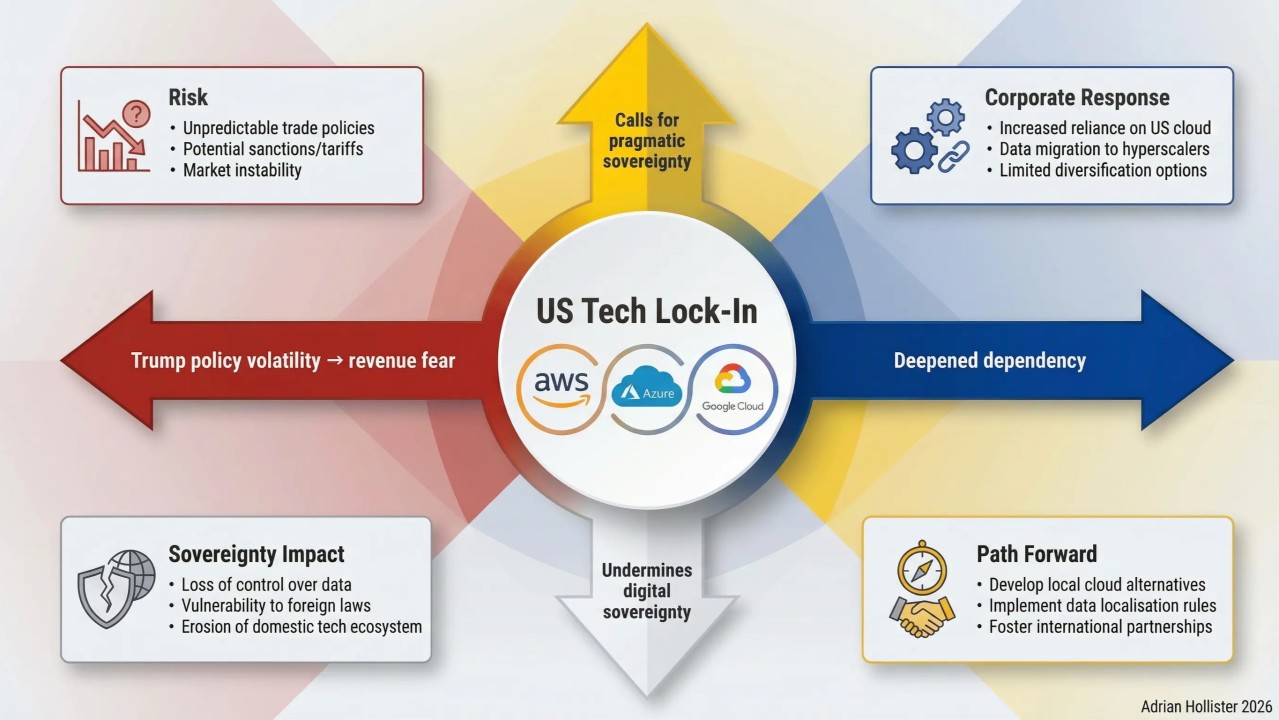
In 2026, Europe's technological autonomy has become an urgent strategic imperative rather than a theoretical policy debate. Digital sovereignty, the ability to control our digital destiny, data, and infrastructure, is now essential.
The Risks of Entrenched Dependence
The Kill Switch Dilemma: Extraterritorial US legislation such as the Cloud Act allows US authorities to access data stored by US-headquartered companies worldwide. In extreme geopolitical scenarios, the possibility of suspended access to critical services cannot be ignored.
Economic and Innovation Drain: While European businesses and citizens create substantial value, much of the resulting profit and insight returns to Silicon Valley. This dynamic limits local innovation and reinforces Europe's role as a consumer rather than a creator.
Values and Regulatory Misalignment: Europe's strong positions on privacy, competition, and ethical AI often conflict with the practices of leading US tech companies.
The 2026 Agenda: From Defence to Offence
Scaling Next Generation Infrastructures: Projects such as GAIA-X must move from conceptual frameworks to widely adopted, commercially viable solutions.
Championing Open Source: Europe's strategic advantage lies in open source and open standards. Expanding support reduces vendor lock-in and encourages a collaborative, innovative ecosystem.
Strategic Investment in Deep Tech: Funds should be directed toward quantum computing, edge computing, cybersecurity, and AI.
Forging Alliances: Strengthening partnerships with like-minded democracies can provide balance and diversify supply chains.
By 2026, the focus will shift from why digital sovereignty is needed to how quickly and effectively it can be achieved. Incremental steps are no longer sufficient; decisive, collective investment is required now.