AI content transparency
How AltLibre labels AI-generated and AI-modified images, why, and the live register behind the labels. Last updated 29 September 2026.
Some of the cover images on this site were made with AI image tools. Every one of them carries a visible label, applied at the point you first see the image, and the full register is published below.
The labels
Two labels are used, following the approach of the European Commission’s Code of Practice on transparency of AI-generated content:
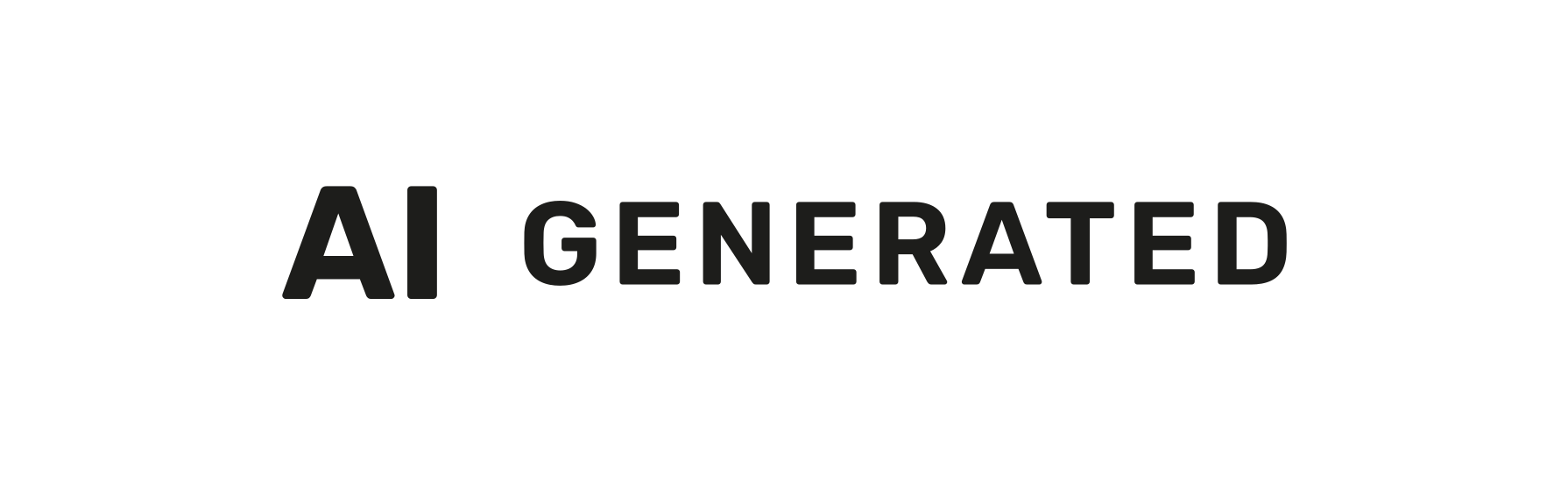
- AI GENERATED: the image was created wholly by an AI image tool.
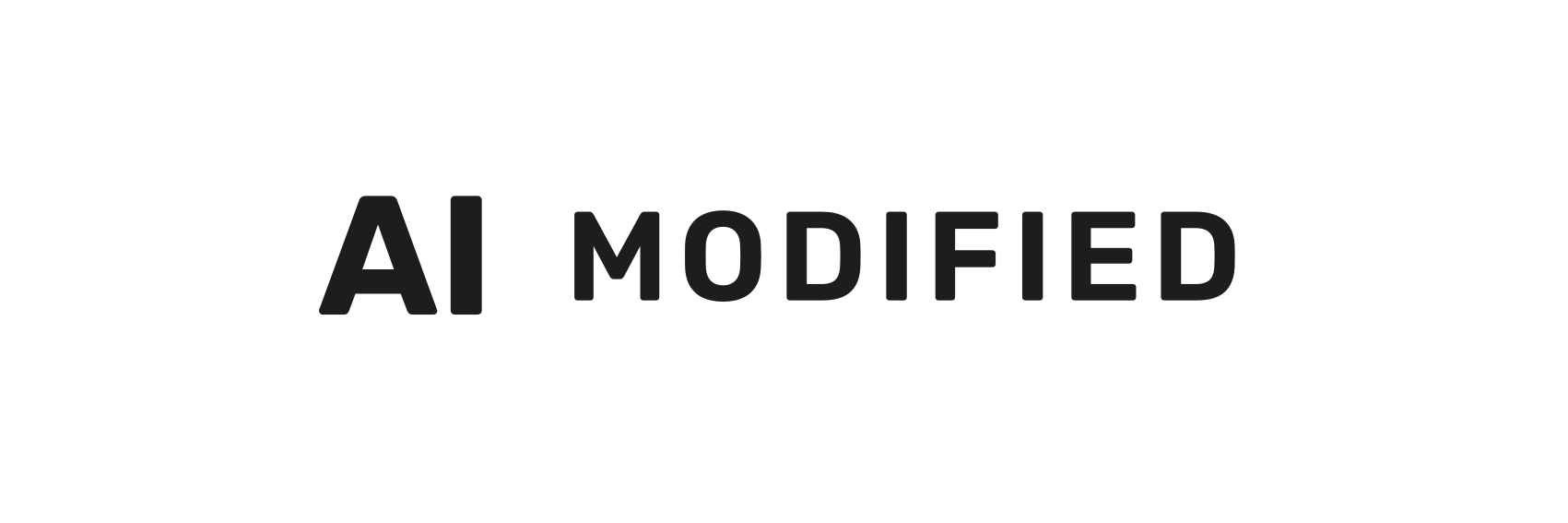
- AI MODIFIED: a real image was materially altered, or combined with AI-generated elements.
The artwork is the European Commission’s official label design, published for exactly this use. On covers and paper heroes the label is an image with proper alternative text, so screen readers announce it too; on article cards it is a short text note in the meta row.
Where labels appear
On the article’s main cover and the paper heroes, the label pill rides on the image itself, with a short caption beneath it stating that the article or paper text is human-written and linking back to this page. On the article cards on the Articles page, the About page, the related-articles row, and the search results the page builds in your browser, the disclosure is deliberately quieter: a small note in the card’s meta row reads “Cover image: AI generated image”, so the preview artwork stays clean and the note cannot be mistaken for a claim about the article. First exposure, every time. There is no page on this site where you can see an AI-made cover without its disclosure.
One limitation: when an article link is shared to LinkedIn, Bluesky or a chat app, the platform fetches the raw image file to build its preview card, and that fetch does not carry the label. The machine-readable disclosure described next travels with the page metadata, but the visible label lives on this site. The two paper share cards are the exception: each carries a small “AI generated image” strip baked into the image itself, so the disclosure travels with the card wherever it is shared.
Machine-readable disclosure
Alongside the visible labels, every article carries structured metadata naming how its cover image was made, using the IPTC Digital Source Type vocabulary in schema.org form: TrainedAlgorithmicMediaDigitalSource for AI-generated covers and CompositeWithTrainedAlgorithmicMediaDigitalSource for AI-modified composites. This is the same vocabulary the Commission’s work on content provenance points to, and it lets search engines and other machines distinguish AI-made images without reading the badge.
The register
Every raster image on the site, meaning article covers, paper covers, and the supporting graphics inside papers, is classified in a provenance register that the site itself reads when rendering pages. The table below is generated from that same file, so it cannot fall out of date. An image cannot be added to the site without a register entry; the deployment pipeline refuses to publish one without it.
41 of 44 covers are labelled AI-generated or AI-modified.
Article text and AI
The articles themselves are written by Adrian Hollister. AI tools are sometimes used the way a sub-editor would be: to challenge a draft, tighten wording, or check an argument. Every article is reviewed, edited and approved by a human who takes editorial responsibility for it, and the cover-image labels above describe the images, not the text. Under Article 50(4) of the EU AI Act, AI-assisted text that has been through human editorial review and is published under a person’s editorial responsibility is not required to carry a disclosure; the labels on this site are about images, where the obligation and the expectation are clearer.
What this site does not do
No chatbots or conversational AI interact with you here. No emotion recognition, no biometric categorisation, no deepfakes, no AI-generated or AI-cloned audio or video. If any of that ever changes, this page changes first.
The legal backdrop
Article 50 of the EU AI Act, applying from 2 August 2026, requires AI-generated and manipulated content to be marked and disclosed. Alongside it, the European Commission has published a voluntary Code of Practice on transparency of AI-generated content, setting out how signatories should mark and label such content. AltLibre is not a signatory, since the Code is aimed at providers and large deployers of generative AI, but this site follows its deployer-side approach anyway: labels that are clear, distinguishable, accessible, and present at the first exposure. In two respects the site’s policy is deliberately stricter than the legal minimum: abstract AI illustrations are labelled even where the law would not require it, and provenance is recorded for every cover, labelled or not.
Corrections
Provenance judgements can be wrong in both directions. If you believe a label is missing or mistaken, email info@altlibre.com or use the contact page and the register will be corrected, visibly, since the badges and this page read from the same source.